


Last week, we attended CEDEC 2026 in Yokohama. CEDEC is a game developers conference (it stands for Computer Entertainment DEvelopers Conference) similar to GDC in San Francisco, but aimed at Japanese developers. This year’s theme was CO-CREATE.
There are different session formats, and they cover all topics from game design to visual arts, production, engineering, academics, business, etc. Of course, we were most interested in the audio sessions! Since they were all in Japanese, here is a quick summary of the ones we attended (and there were more!).
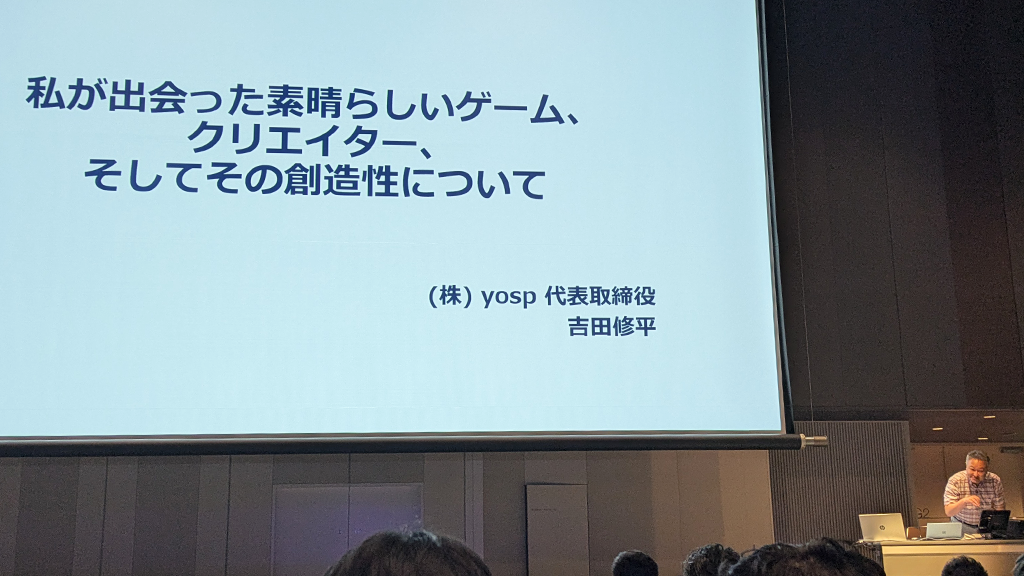
But first, the event kicked off with a keynote from Shuhei Yoshida, the former president of Sony Worldwide Studios (where Tsugi’s founder worked). It was great to hear anecdotes about some of our favorite games!
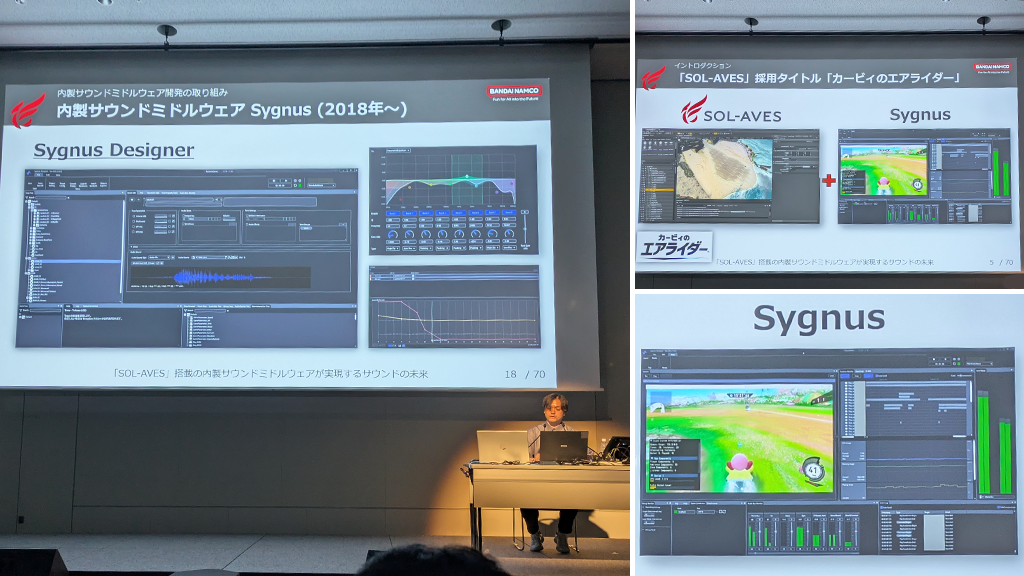
Right after the keynote, we went to our first actual audio session, which was about Bandai Namco’s in-house audio middleware, Sygnus. It is part of their proprietary Sol-Aves game engine. Its main goal is to streamline the sound production workflow and enable rapid iteration without interrupting development. The UI looked like a lighter version of Wwise, but it was tailored to their own needs and directly integrated with the rest of their engine. Bandai Namco Studios has just started using it in production, with the first shipped game being Kirby Air Riders.
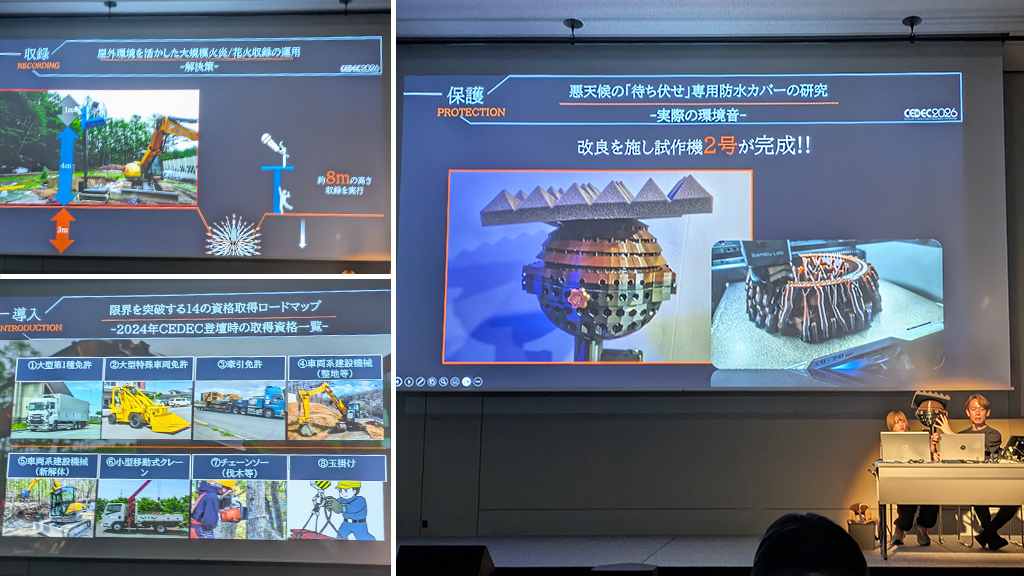
The most entertaining audio session of the day was definitely the one from AZSTOKE! They explained how, through trial and error, they managed to record huge Foley sessions featuring large impacts, debris, flamethrowers and more, using a large natural site, bulldozers, cranes, and some very creative solutions, including 3D-printed microphone protections. They showcased specific mechanisms for triggering the fall of large objects at a safe distance, talked about the transmission of audio over long distances between the microphones and audio interfaces, and more!
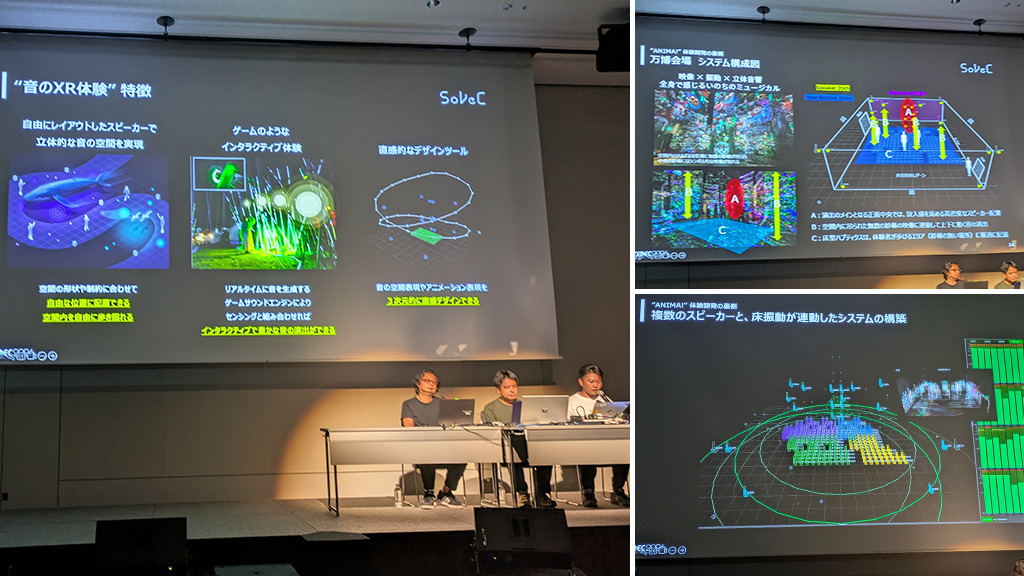
In their session, SoVeC, owned by Sony Network Communications Inc., explained how their technology handled a staggering number of audio and haptic channels for Expo 2025 Osaka. It was great to see what Terasaka-san, who worked with our founder during his PlayStation days, had been up to!
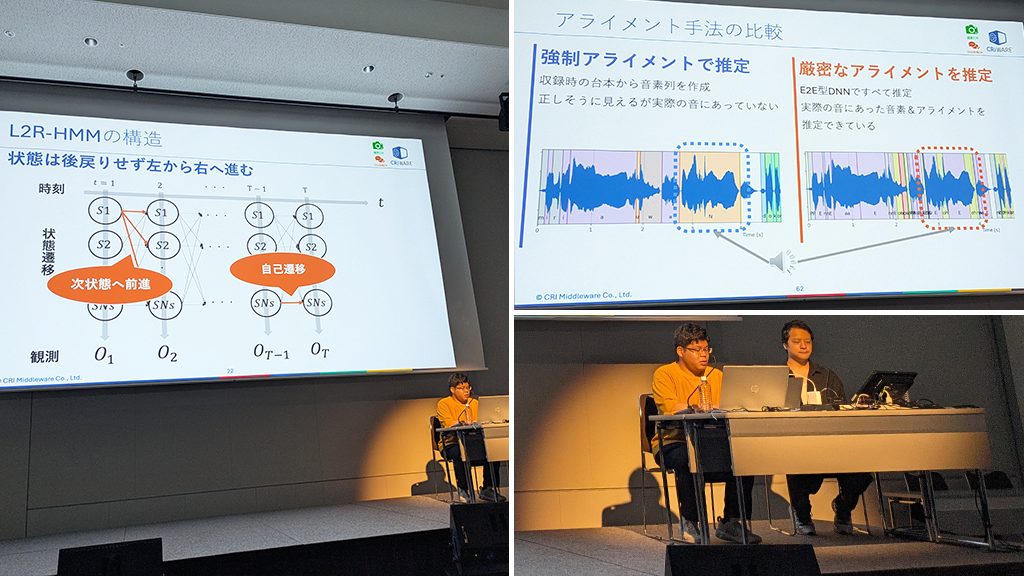
On the morning of the second day, we attended 2 sessions on game audio middleware. In the first one, CRI Middleware, the developers of the CRI ADX audio middleware (the Japanese equivalent of Wwise), explained what was new in CRI Lipsync Alive, their lip-sync solution that leverages both signal processing and machine learning.
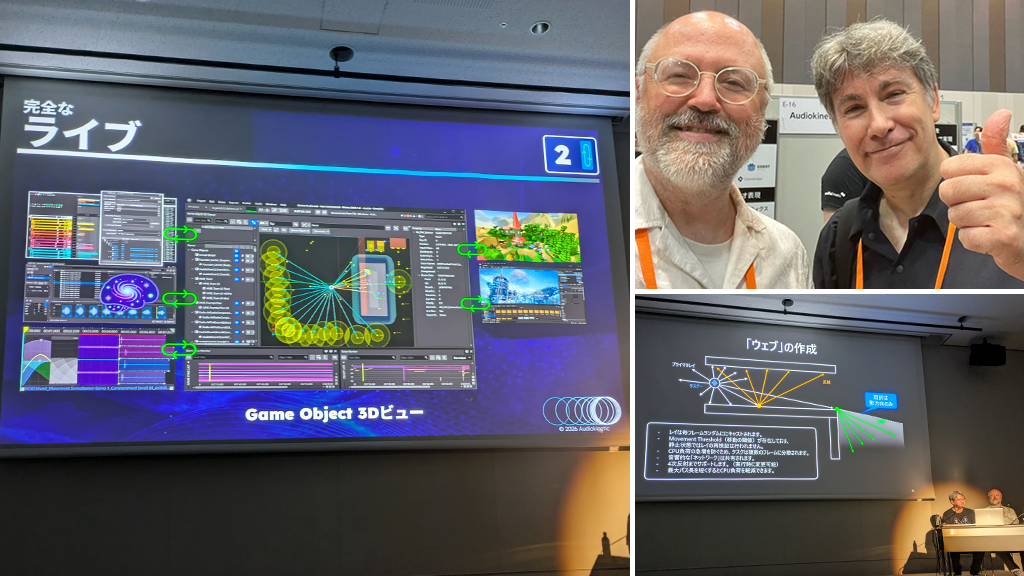
The second session was from AudioKinetic. Damian Kastbauer and Hiroshi Goda talked about what was new in Wwise, before focusing on the Wwise Reflect plug-in and explaining the various components of Wwise Acoustics (room and portal propagation, diffraction, transmission, reverb zones, early reflections, etc.). It was great to meet Damian in person during his first trip to Japan!
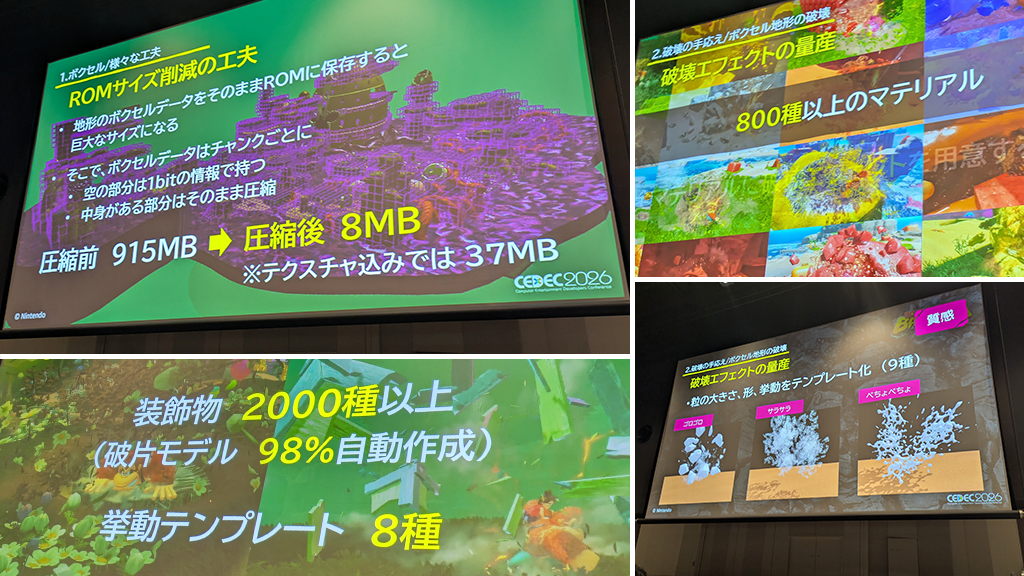
During CEDEC, there were several sessions from Nintendo about Donkey Kong Bananza, and we attended the one focusing on voxels and sound design. The developers shared how they mass-produced sound effects for the destruction of more than 800 different materials!
Donkey Kong Bananza was definitely the game of the conference; all the sessions about it were packed, and it absolutely swept the CEDEC Awards!
We also attended Konami‘s audio session on Metal Gear Solid Δ: Snake Eater. One of the programmers explained why the team deliberately chose not to rely on real-world acoustic theory for gunshots and spatial audio. Instead, they prioritized impact and player experience over strict realism. (Sadly, taking pictures was not allowed.)
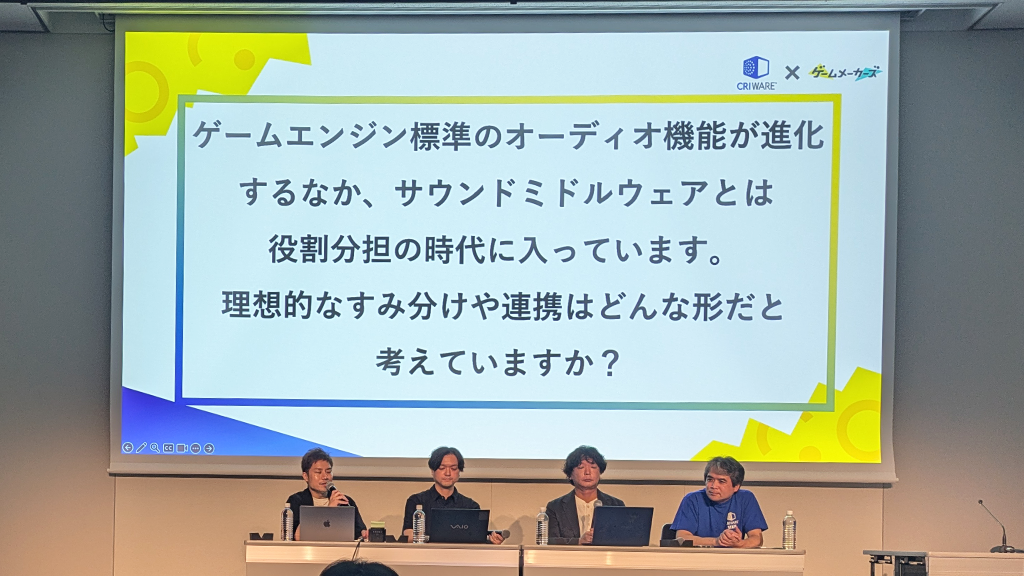
For the last session of the second day, we went to a panel on the future of game audio middleware. It included a journalist well versed in game audio, the manager of a game sound design company, the CTO of CRI Middleware, and a sound manager from Bandai Namco Studios. In short, everyone wants tools that handle the tedious tasks while leaving us free to focus on being creative!
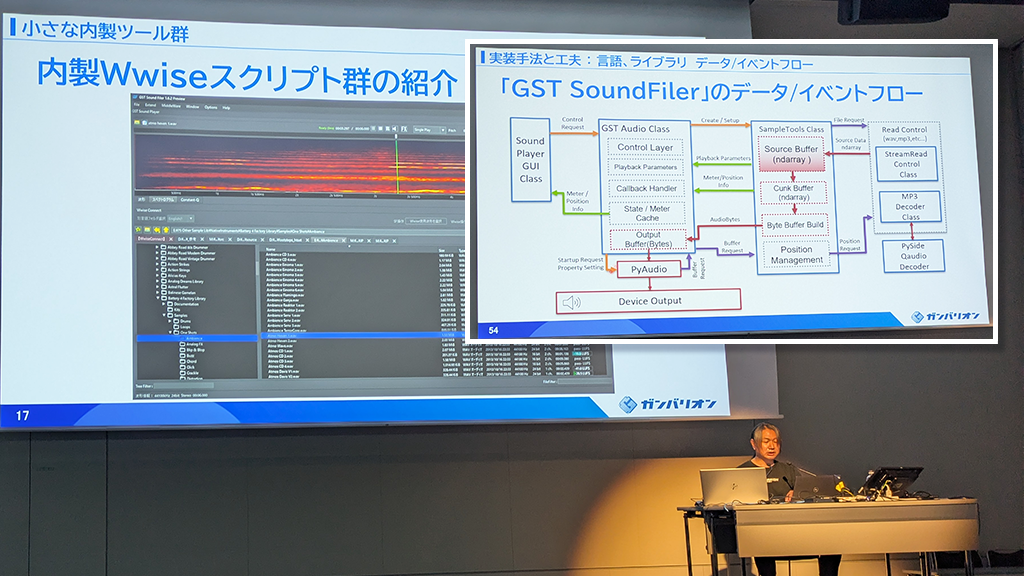
On the third day, we mostly attended non-audio talks, but in the afternoon, we were still able to attend two sessions focused on sound tools. In the first one, a sound engineer from Ganbarion explained the evolution of their internal tool, GST SoundFiler, from a small utility to a full-featured application that sits between your samples and your audio middleware, helping to streamline your workflow.
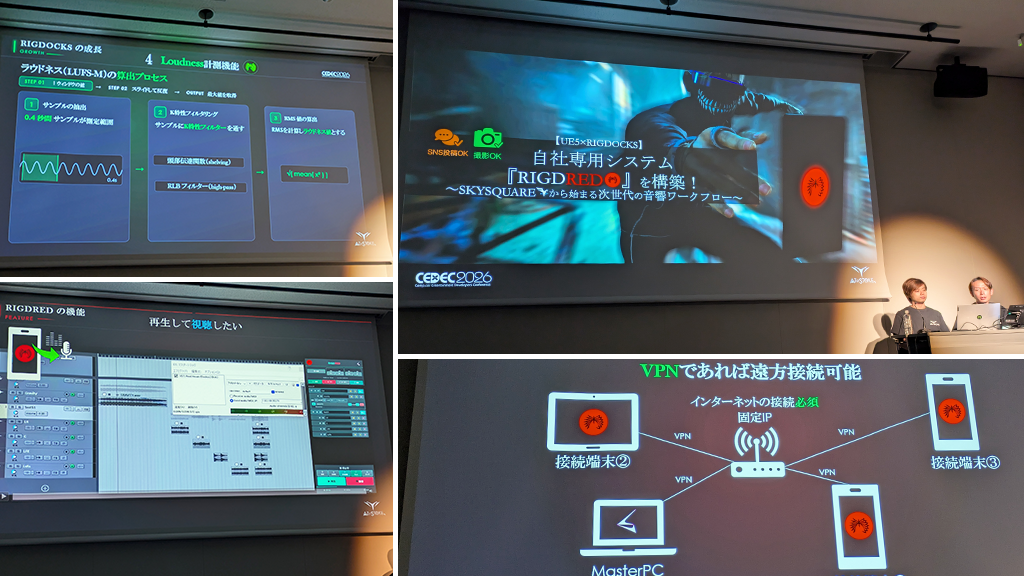
And finally, our last session at CEDEC was about two systems developed by AZSTOKE. RIGDOCKS is an API with more than 500 functions designed to improve your workflow, while RIGDRED lets you remotely control Reaper from a mobile device over your local network.
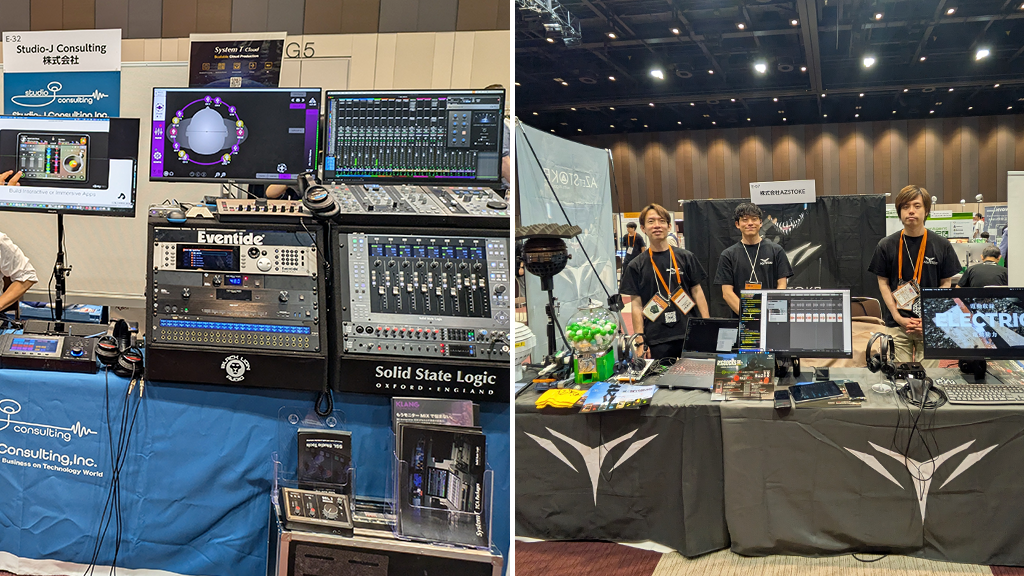
CEDEC also has an exhibition floor, and this was a great year for audio folks, with plenty of sound-related booths!
In addition to the usual suspects, such as game audio middleware companies Audiokinetic and CRI Middleware, there was plenty to discover: AZSTOKE was showcasing its audio tools, Yamaha its Sound xR spatial audio technology, Sony its audio separation algorithms, Toshiba its latest text-to-speech, and GATARI its audio-first game engine for Mixed Reality. Special mention to the students of Keio University, who were demonstrating their Shared Vibroscape system, where people can perceive an invisible presence through both sound and physical vibration.
All in all, it was a very inspiring event, and we came back to Niigata with lots of ideas and energy to create new game audio technology!
